
A professional iMac repair service requires understanding a device that exists in a category by itself. The iMac is not a laptop — it sits on a desk and never moves. It is not a standard desktop tower — you cannot open a side panel and swap components in seconds. The iMac is Apple’s all-in-one desktop computer where the Retina display, the processor, the storage, the speakers, and the power supply are all built into a single sealed aluminum chassis. Repairing any internal component — even replacing a hard drive — requires removing the entire screen first, which is bonded to the frame with industrial adhesive strips. This makes iMac repair fundamentally different from every other type of computer repair.
At PC Mobile, our technicians repair every iMac generation — from the Intel-based 21.5-inch and 27-inch models through the current Apple Silicon M1, M3, and M4 iMacs. Every iMac repair comes with our 30-day warranty on parts and labor.
The iMac’s all-in-one design creates repair challenges that no laptop, desktop tower, or MacBook shares.
iPhone X and newer
On a desktop tower, you open the side panel in five seconds to access any component. On a laptop, you remove the bottom panel. On an iMac, the Retina display is bonded to the aluminum chassis with adhesive strips, and it must be carefully separated and lifted off before you can reach anything inside — the logic board, the power supply, the storage drive, the RAM (on 21.5-inch models), or the fans. Removing an iMac screen without cracking the glass or damaging the display requires controlled heating, specialized suction tools, and patience. After the repair is complete, new adhesive strips must be applied and the screen reseated to create a dust-free seal. This screen-removal requirement makes iMac repair more labor-intensive than any other desktop format.
Power Supply
Desktop towers have a separate, modular power supply unit that plugs in and unplugs with standard connectors. The iMac’s power supply is integrated inside the chassis behind the display — it connects directly to the logic board through a proprietary cable. When an iMac will not turn on, the internal power supply is a common culprit. Diagnosing and replacing an iMac power supply requires the screen-removal process described above, plus careful handling of high-voltage capacitors that retain charge even when unplugged. This is not a repair for the inexperienced.
Desktop Computers
Intel-based iMacs (2012–2019 models) have upgradable components — the 27-inch model has a user-accessible RAM door, and internal SSD upgrades are possible with the right tools. These machines benefit enormously from an SSD upgrade if they are still running on a spinning hard drive.
Apple Silicon iMacs (M1, M3, M4 — 2021 onward) have the processor, RAM, and storage soldered onto a single unified chip package. Nothing inside can be upgraded after purchase. Repairs on Apple Silicon iMacs are limited to screen replacement, power components, and macOS software recovery. This is a critical distinction we explain to customers upfront so they understand their options before committing to a repair.
Desktop towers
iMac displays are some of the highest-quality screens in any computer — 4K Retina on the 21.5-inch models and 5K Retina on the 27-inch models. These are not standard monitors. Replacement panels must match Apple’s exact resolution, color profile, and brightness specifications. A cheap or incorrect replacement panel will show color inaccuracy, uneven brightness, or resolution mismatches that are immediately obvious on a screen this large. We source premium quality iMac display panels that match Apple’s original specifications.

iMac screen repair is our most requested iMac service. Cracked glass, dead pixels, display lines, and backlight failure are all problems we resolve. The 21.5-inch and 27-inch Retina displays require careful adhesive removal, precise screen separation, and proper resealing after the new panel is installed. Most iMac screen replacements take two to four hours due to the adhesive curing process. We test the display for uniform brightness, color accuracy, and touch-free dust seal before returning the machine.

An iMac that will not power on could be a failed internal power supply, a logic board failure, a faulty power cable, or a software corruption that prevents the boot process. We perform a systematic diagnosis: testing the power supply output voltages, checking the logic board diagnostic LEDs (present on Intel models), and verifying the boot sequence. If the power supply has failed, we replace it. If the logic board has failed, we assess whether component-level repair is possible before recommending a full board replacement.
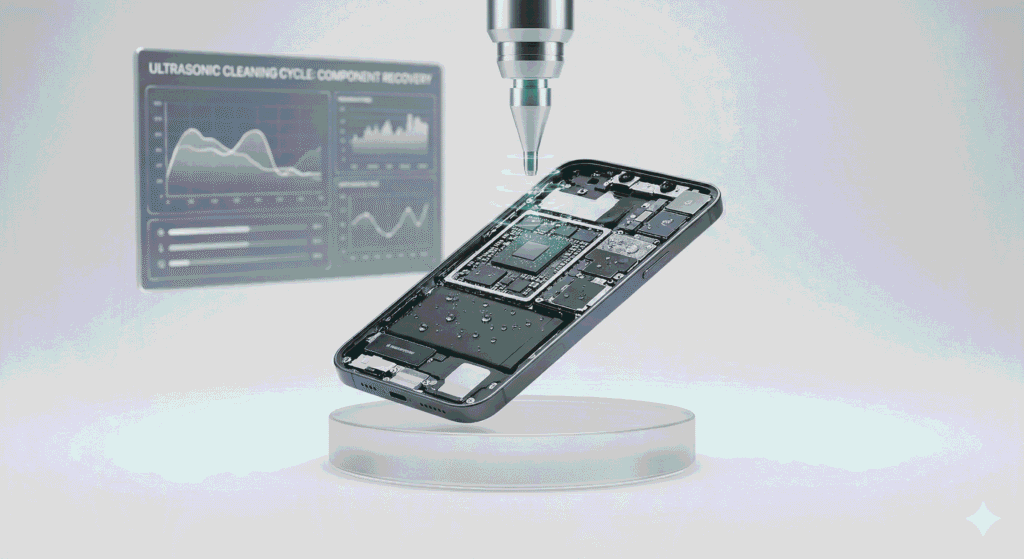
The iMac logic board is the main circuit board containing the processor, GPU (on Intel models), memory controller, and all I/O connections. Logic board failures cause symptoms like no power, no display output, kernel panics, or USB ports not functioning. The notorious 2011 iMac AMD GPU defect — where the dedicated graphics chip fails due to a manufacturing defect — is a known issue we have repaired many times. We perform component-level diagnosis and, where possible, targeted repair on the existing board to avoid the higher cost of full logic board replacement.
Many Intel iMacs (2012–2019) shipped with traditional spinning hard drives or small Fusion Drives. These machines run painfully slow by modern standards — boot times of two to three minutes, apps taking 30 seconds to open, and constant spinning wheel icons. Replacing the internal hard drive with a solid-state drive transforms these iMacs into machines that feel new. Boot times drop to under 20 seconds. Apps open instantly. The iMac becomes responsive and enjoyable to use again — for a fraction of what a new iMac costs. We clone your existing data to the new SSD so nothing is lost.
The 27-inch iMac (2012–2019) has a user-accessible RAM door on the back of the chassis — one of the few Apple products that allows easy RAM expansion. Most 27-inch iMacs shipped with 8 GB of RAM. Upgrading to 16 GB or 32 GB dramatically improves multitasking, especially for creative professionals using Photoshop, Final Cut Pro, or Logic Pro. The 21.5-inch iMac has RAM soldered to the logic board and cannot be upgraded. Apple Silicon iMacs (M1, M3, M4) have unified memory built into the chip and cannot be upgraded.

If your iMac screen appears completely dark but you can see a faint image when you shine a flashlight at the display, the backlight system has failed — not the display panel itself. Backlight failure on iMacs can be caused by a failed LED driver board, a damaged LVDS cable connecting the display to the logic board, or a failed component on the logic board itself. We diagnose which link in the backlight chain has failed and repair the specific component, which is often less expensive than replacing the entire display.
Corrupted macOS installations, failed macOS updates, kernel panics, and boot loops are problems we resolve without unnecessary data loss. We use Apple’s recovery tools to repair or reinstall macOS while preserving your user data and settings whenever possible. When a clean installation is truly needed, we perform a full backup to an external drive first.
iMacs have internal fans that accumulate dust over years of use. Unlike a desktop tower where you can blast compressed air through the case, iMac fan cleaning requires removing the screen to access the fan and heatsink assembly. We clean the internal fans, clear dust from the heatsink fins, and replace thermal paste on Intel iMac processors to restore proper cooling performance and reduce fan noise.
Apple Silicon iMacs use the 24-inch Liquid Retina display in a thin, colorful aluminum design. Internal components are not upgradable. Repairs are limited to screen replacement, power components, port issues, and macOS recovery.
The 27-inch Intel iMac is the most commonly repaired iMac model. These machines are heavily used by professionals and creatives. SSD upgrades and RAM expansion are the most popular services — they transform a slow 27-inch iMac into a fast, responsive machine for years of continued use.
The 21.5-inch iMac has soldered RAM (not upgradable), but SSD upgrades are still possible on Intel models and provide a massive performance improvement. Screen repair and logic board diagnosis are common services on these models.
We repair legacy iMac models, though parts availability varies. The 2011 iMac 27-inch is known for the AMD GPU defect — a manufacturing flaw that causes graphics failure. We have repaired this specific issue many times and can advise you on whether repair is worthwhile for a machine of this age.
If your iMac is under AppleCare+ coverage, Apple will repair or replace it at a reduced cost. If you need a repair covered by an Apple extension program for a known defect, Apple is the right choice. Contact Apple first to check your coverage.
If your iMac is out of warranty (which most iMacs are after three years), Apple Store repair costs are significantly higher than independent repair. Apple Store wait times typically range from five to fourteen days. We offer same-day service on most iMac repairs. We also perform SSD and RAM upgrades that the Apple Store does not offer for older Intel iMacs — they will often recommend buying a new iMac instead of upgrading your existing one.
No. We are an experienced independent repair shop, not an Apple Authorized Service Provider. If your iMac is under AppleCare, we recommend contacting Apple first. If your device is out of warranty, we offer same-day professional repair with a 30-day warranty on parts and labor. Our 265+ Google reviews reflect the trust our customers place in our Apple repair work.
We serve iMac owners from Sterling (20164), Ashburn (20147, 20148), Herndon, Dulles, South Riding, and throughout Loudoun County, Virginia. The Sterling-Ashburn tech corridor has an above-average concentration of iMac users — creative professionals, remote workers, and home office users who rely on their iMac as their primary work machine.
Ashburn, VA customers: We are just 10 minutes from Ashburn via Route 7. Ashburn repair pages coming soon.
The iMac is an all-in-one design where every internal component sits behind the display. Apple bonds the screen to the aluminum chassis with adhesive strips, creating a sealed unit. To access the logic board, power supply, storage drive, or fans, the screen must be carefully separated from the frame first. After the repair, new adhesive strips are applied and the screen is reseated to create a dust-free seal.
It depends on your model. Intel-based iMacs (2012–2019) can receive significant upgrades: replacing a spinning hard drive with an SSD is the single most impactful improvement, and the 27-inch model supports RAM expansion through an accessible door on the back. Apple Silicon iMacs (M1, M3, M4) cannot be upgraded because the processor, RAM, and storage are fused into a single chip. We check your model and tell you exactly what is possible.
iMacs have long useful lifespans — a well-maintained Intel iMac can serve you for eight to twelve years. If your iMac has a single fixable problem (slow performance, cracked screen, failed power supply), repair is usually far cheaper than buying a new iMac that starts at $1,299. An SSD upgrade on a 2017 iMac, for example, can make it feel like a new machine for a fraction of that cost. We will give you an honest recommendation based on your specific model and situation.
iMac screen repair cost varies by model and screen size. The 27-inch 5K Retina display costs more to replace than the 21.5-inch 4K panel. The Apple Silicon 24-inch iMac display has its own pricing. Contact us or walk in for a free quote specific to your iMac model. We are typically significantly less expensive than Apple Store out-of-warranty pricing.
If your iMac is under AppleCare, contact Apple first. If your iMac is out of warranty, we offer same-day service at typically lower cost than the Apple Store. The nearest Apple Store (Tysons Corner) is 25–30 minutes from Sterling with wait times of five to fourteen days. We are 10 minutes from Ashburn with same-day turnaround on most repairs.
Geek Squad does not perform iMac hardware repairs in-store. They send iMacs to Apple for service, which means the same multi-week wait time as going to the Apple Store directly. We repair iMacs in our own shop, same day, without shipping your machine anywhere.
The 2011 iMac 27-inch used an AMD Radeon graphics chip with a manufacturing defect that causes the GPU to fail over time. Symptoms include screen artifacts (colored lines, blocks), display flickering, and eventually a completely blank display. Apple ran an extension repair program for this issue that has since expired. We can diagnose and repair this specific defect on 2011 iMacs.
No. Walk-ins are welcome during business hours. Please bring the iMac unit itself — you do not need to bring the keyboard, mouse, or power cable unless you suspect one of those is the problem. iMacs are heavy (the 27-inch model weighs about 20 pounds), so plan accordingly for transport. Call (703) 594-9339 or fill out our online quote form for a free estimate before your visit.